
Introduction to Diamonds
Choosing the Right Diamond Cut
Explore the secrets of diamond brilliance with our comprehensive guide to diamond cuts. Discover the intricacies of cut grading and delve into the anatomy that defines a diamond’s sparkle.
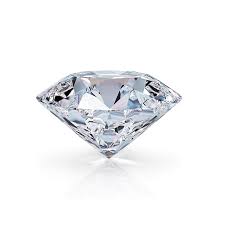
How is diamond cut defined?
As many gem experts would attest, diamond cut stands out as the most critical factor to consider when selecting a diamond. In natural diamonds, the top-notch cut is rated as Excellent by GIA, while for lab-grown diamonds, an Ideal cut by IGI is considered superior. Diamonds graded Excellent (by GIA) or Ideal (by IGI) exhibit meticulous angles, symmetry, proportions, facet balance, and top-quality polish achieved by skilled diamond artisans. A precisely cut diamond ensures optimal light reflection, enhancing its brilliance, fire, and sparkle to the fullest extent.
Centuries of research and experimentation have deepened our scientific understanding of diamond behavior, particularly how light interacts within these crystals. This knowledge allows us to maximize their innate brilliance through precise diamond cutting techniques with exacting measurements.
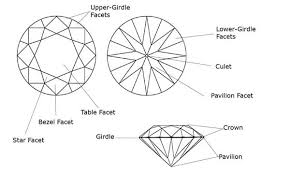
Facets of a Diamond: Exploring Each Facet's Role
A diamond cut consists of eight distinct facets, each meticulously calculated to fulfill its specific role. When observing a diamond set in jewelry, the table—the largest facet—often appears most prominent from above. However, achieving the optimal diamond cut relies on achieving a harmonious balance among all these facets:
- Table
- Upper girdle
- Star
- Bezel
- Girdle
- Pavilion
- Lower girdle
- Culet
Impact of Diamond Cut on Light Performance
To fully understand the way diamond cuts work, it’s helpful to have an idea of the way light behaves inside a diamond. There are three main ways that a diamond’s sparkle can be categorised.
Dispersion, otherwise known as fire, refers to the coloured light that has been split into its full rainbow spectrum. While white light enters and exits through the table, flashes of colour are visible when light is propelled out from the centre of the stone and through the crown.
Brilliance is how bright a diamond is – that is, how much white light it exudes and reflects out of the stone. The wide table at the top of a diamond takes in natural light, which is then split apart into the full spectrum of colours. These rebound and reflect within the diamond before being projected upwards and out through the table, exiting once again as pure white light.
Scintillation is how the diamond glistens and twinkles – it is the way in which light bounces and plays off the facets of a diamond when it is moved. When a diamond is well cut, light will emanate from every angle, and provide the mesmerising sparkle we all know and love.
Consult with Our Jewellery Expert
Allow our team of skilled gemologists, craftsmen, and designers to assist you in crafting a uniquely personalized piece of jewelry.

What criteria are used to assess diamond cut?
Diamond cut grading ranges from Excellent to Poor according to GIA standards, and from Ideal to Fair by IGI. GIA is renowned for grading natural diamonds, while IGI is highly regarded for lab-grown diamonds.
Understanding the differences between cut grades from various labs can be confusing. Refer to the comparison table below to distinguish between GIA and IGI cut grades.
Among the 4Cs (cut, color, clarity, carat weight), cut is considered the most crucial by gemologists. For optimal brilliance, aim for an Excellent or Very Good cut in natural diamonds, or an Ideal cut in lab-grown diamonds. Poorly cut diamonds, whether too deep or shallow, often lack sparkle.
Achieving precise proportions for each facet and angle is essential for an Excellent cut. Misaligned facets can cause light leakage through the pavilion or culet instead of reflecting it through the table and crown, resulting in a less vibrant appearance.
Diamonds with Excellent to Very Good (GIA) or Ideal (IGI) cuts reflect light effectively through their table and crown, displaying striking flashes of both white and colored light.
| GIA Cut Grade (Natural) | IGI Cut Grade (Lab Grown) | Grade Description |
|---|---|---|
| Excellent | Ideal | The best diamond cut grade, an Excellent cut will offer optimum fire and brilliance, with crisp facets and a smooth polish. This will appear bright, icy and extremely sparkly |
| Very Good | Excellent | You may not notice a huge difference between Very Good and Excellent, but the diamond will reflect slightly less light through the table. We recommend this is the lowest cut grade you consider |
| Good | Very Good | Some light will still reflect through the table of the stone, but you’ll notice a lack of sparkle compared to an Excellent cut diamond, and light is lost through the base and sides of the diamond |
| Fair | Good | The diamond will lose a significant amount of light through its base and sides, meaning it will appear dull and lacklustre |
| Poor | Fair | The majority of light will be lost through the diamond’s base and sides, meaning it will have next to no sparkle |
What makes diamond cut so crucial?
A diamond cut to an Excellent grade by GIA or Ideal grade by IGI can significantly enhance the diamond’s overall appearance. It optimizes the stone’s color and clarity, and can even give the illusion of a larger diamond. When a diamond is expertly cut to these standards, its polish and proportions maximize brilliance, fire, and scintillation, resulting in a dazzlingly sparkling diamond.
Shape and Aesthetics: Brilliant Cut vs Step Cut Diamonds
Only round brilliant cut diamonds receive a specific ‘cut grade’. For other diamond shapes, focus on ensuring they have Excellent symmetry and polish grades, or at least Very Good. Brilliant cut diamonds are crafted to maximize sparkle, whereas step cuts showcase the clarity of the stone with broader, parallel facets that create more subdued flashes of light.
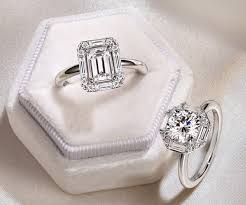
Which diamond shape reflects light the most?
The diamond shape known for its exceptional sparkle is the round brilliant cut diamond, especially when it receives a triple Excellent grade from GIA or Ideal grade from IGI. This indicates the diamond has achieved optimal proportions, symmetry, and polish. The round brilliant cut is renowned for its brilliance due to its numerous lines of symmetry and 58 facets that work together seamlessly to maximize the reflection of light within the diamond, enhancing its sparkle as light exits through the table. Round brilliant diamonds are often the most sought-after and costly due to their unmatched brilliance, high demand, and the significant amount of diamond material lost during the cutting process to achieve its precise shape.
What is the most uncommon diamond cut shape?
There are several diamond shapes that are less commonly found compared to others. Asscher and radiant diamonds are considered rarer due to lower demand compared to more popular shapes. Additionally, old mine cut diamonds, also known as old European diamonds, are exceptionally rare. These diamonds are no longer cut in this antique shape, making existing ones often part of inherited collections or private holdings, with very few available for purchase.
Which diamond shape appears the largest?
Brilliant cut diamonds often appear larger than step cut diamonds due to their superior sparkle. Certain brilliant cut shapes create a larger visual impact, primarily because of their wider table facets. For instance, marquise, oval, and pear diamonds tend to appear larger compared to other diamond shapes of equivalent carat weight.
Choosing the Right Diamond Cut
Shade
Discover which diamond color grades provide the best visual appeal and which ones are less desirable
Purity
Explore the diamond clarity grading scale, understand diamond inclusions, and uncover why finding a completely flawless diamond is exceptionally rare.
Caratage
What exactly is diamond carat weight and how does it impact pricing? Discover insights with our comprehensive carat weight guide.
Need help choosing the perfect ring?
Get in touch with our experts - we’re on hand to help.
- + 91 12345 67890
- Live Chat
- Visit our showroom
- Send us an email
- Book Appointment
- Help & FAQs
ShimmerShack
You can easily edit this paragraph to talk about your brand as well as your products to your potential customers.
Reach Us
- Lorem ipsum dolor sit amet, consectetur adipiscing elit. Quisque.
- Phone: +91 1234567890
- test@gmail.com