
GEMSTONE ESSENTIALS
Diamond Purity
Discover the diamond clarity grading scale, understand diamond inclusions, and uncover the rarity of flawless diamonds. Our comprehensive guide provides expert advice on selecting clarity grades that ensure an eye-clean diamond without overspending.
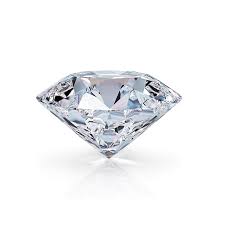
How is diamond clarity defined?
Diamond clarity refers to the assessment of internal marks, blemishes, and flaws present in nearly all diamonds, whether natural or lab-grown. Finding a diamond completely devoid of such inclusions is exceptionally rare, but such diamonds exist and are termed as ‘flawless’. The closer a diamond is to being flawless, the higher its clarity grade, reflecting its rarity and commanding a higher cost.
How is a diamond clarity grade determined?
Natural diamonds are created deep within the Earth’s mantle over billions of years. Extreme heat and pressure cause carbon molecules to crystallize and expand, incorporating and trapping trace elements during formation. This process can result in small cracks and imperfections within the diamond, known as inclusions, or surface marks called blemishes. The intensity and visibility of these characteristics are evaluated on a diamond clarity scale.
How do inclusions form in diamonds?
Diamond inclusions encompass various types of internal marks and flaws, each caused by different natural phenomena. These include:
- Crystal: Tiny diamonds or other minerals inside the diamond, sometimes colored.
- Pinpoints: Minute white or black crystals resembling pinpricks within the diamond.
- Needle: An elongated, thin line of crystal.
- Cavity or chip: Often caused by stress during diamond cutting, resulting in a cavity on the surface.
- Feathers: Internal cracks or fissures that appear feathery or transparent without magnification.
- Clouds: Clusters of pinpoint inclusions that can give a diamond a milky or hazy appearance.
- Knot: A small crystal that extends to the surface of the diamond, resembling a tiny bump.
- Graining: Long streaks or lines within the diamond resembling wood grain, often more visible from certain angles.
- Twinning Wisp: Indicates interruptions in diamond growth, often presenting as intertwined patterns of pinpoints, needles, feathers, and clouds.
Consult with Our Jewellery Expert
Allow our team of skilled gemologists, craftsmen, and designers to assist you in crafting a uniquely personalized piece of jewelry.

Exploring the Diamond Purity Grading System
Diamond clarity is assessed using a scale that ranges from FL (flawless) to I3 (very heavily included), utilizing combinations of letters and numbers. Within this scale, grades like VS2 (very slightly included) to SI1 (slightly included) are often considered optimal for achieving a balance between value and visual appeal, offering diamonds with eye-clean beauty. Flawless diamonds, characterized by negligible inclusions, represent the pinnacle of rarity and value in the diamond world.
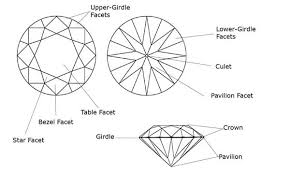
Mastering the Diamond Clarity Scale
Diamond clarity is evaluated on a continuous scale using a combination of letters and numbers, ranging from FL (flawless) to I3 (very heavily included). Within this scale, grades like VS2 (very slightly included) to SI1 (slightly included) are considered optimal in terms of value and visual appeal, offering diamonds that appear clean to the naked eye.
When assessing diamond clarity, several factors are considered. This includes the visibility and clarity of inclusions or blemishes under 10x magnification, their location within the diamond, size, color, and quantity.
Diamonds are graded from a top-down view, focusing on the inclusions and blemishes that are visible (under magnification or not) when the diamond is set in jewelry. The grading process involves mapping each flaw or blemish on a diagram to document the diamond’s clarity characteristics. Based on this assessment, the diamond is assigned a clarity grade, such as ‘VS2’ or ‘SI1’.
How does diamond clarity affect its brilliance?
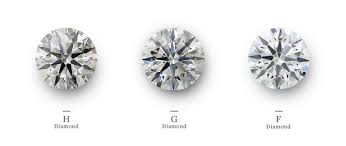
To a certain extent, diamond clarity—from ‘Flawless’ down to ‘Slightly Included 1’—typically does not affect its sparkle. However, diamonds graded lower may contain inclusions that could diminish their sparkle. Heavy inclusions can interfere with the internal reflection of light, reducing the brilliance that reaches the viewer’s eye. In summary, only diamonds graded ‘Slightly Included 2’ and below are likely to experience reduced sparkle due to inclusions. Refer to the diagram below to observe the contrast in light reflection between a diamond with minimal inclusions and one with significant inclusions.
Why should you consider compromising on diamond clarity?
When purchasing a diamond, compromising on clarity can be advantageous as most inclusions are typically invisible to the naked eye. Opting for diamonds graded between VS2 to SI1 allows you to reduce costs while still achieving a stone that appears clear without magnification. In diamonds graded lower than SI1, inclusions may become visible without magnification, potentially impacting the stone’s brilliance by obstructing light reflection.
It’s worth noting that without a microscope or loupe, the differences between a FL diamond and one graded down to SI1 may not be discernible to the untrained eye. Therefore, focusing on clarity grades within the VS2 to SI1 range can offer significant savings without compromising on visible quality.
Choosing the Right Diamond Cut
Shade
Discover which diamond color grades provide the best visual appeal and which ones are less desirable
Purity
Explore the diamond clarity grading scale, understand diamond inclusions, and uncover why finding a completely flawless diamond is exceptionally rare.
Caratage
What exactly is diamond carat weight and how does it impact pricing? Discover insights with our comprehensive carat weight guide.
Need help choosing the perfect ring?
Get in touch with our experts - we’re on hand to help.
- + 91 12345 67890
- Live Chat
- Visit our showroom
- Send us an email
- Book Appointment
- Help & FAQs
ShimmerShack
You can easily edit this paragraph to talk about your brand as well as your products to your potential customers.
Reach Us
- Lorem ipsum dolor sit amet, consectetur adipiscing elit. Quisque.
- Phone: +91 1234567890
- test@gmail.com