
Ethical Engagement Ring
we understand the significance of crafting an ethical engagement ring that aligns with your values—and ours. We’re committed to contributing to a responsible and evolving jewelry industry. From the outset, we prioritize transparency and sustainability in every step of our process.

Ethical Excellence: Creating Conscious Engagement Rings & Fine Jewelry
we uphold a strong commitment to crafting our engagement rings with ethical materials sourced from trusted origins. We recognize the challenges within the diamond and precious metal industry and believe in actively promoting positive change while supporting local mining-dependent economies. We meticulously select diamonds from reputable suppliers who adhere to stringent ethical standards, ensuring that each stone is conflict-free and sourced responsibly. By prioritizing ethical practices, we contribute to sustainable mining practices and support communities where diamonds are ethically mined.
Ethical diamond ring inspiration
Discover the essence of personal expression with our bespoke engagement rings, each meticulously designed with love and skill in our Hatton Garden studio.
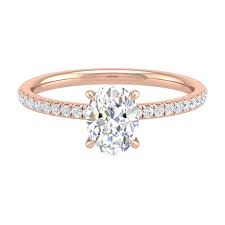
oval Bardot Scallop
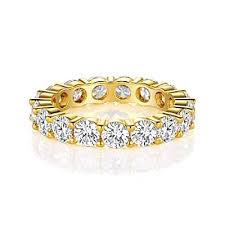
Beaumont
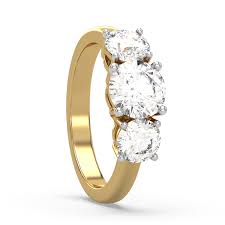
Round Leigh
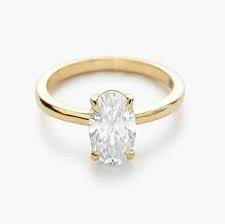
oval Solitaire with Matte finish
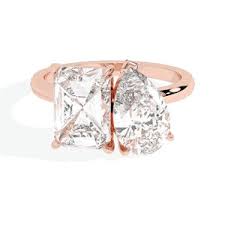
Pear Toi et Moi
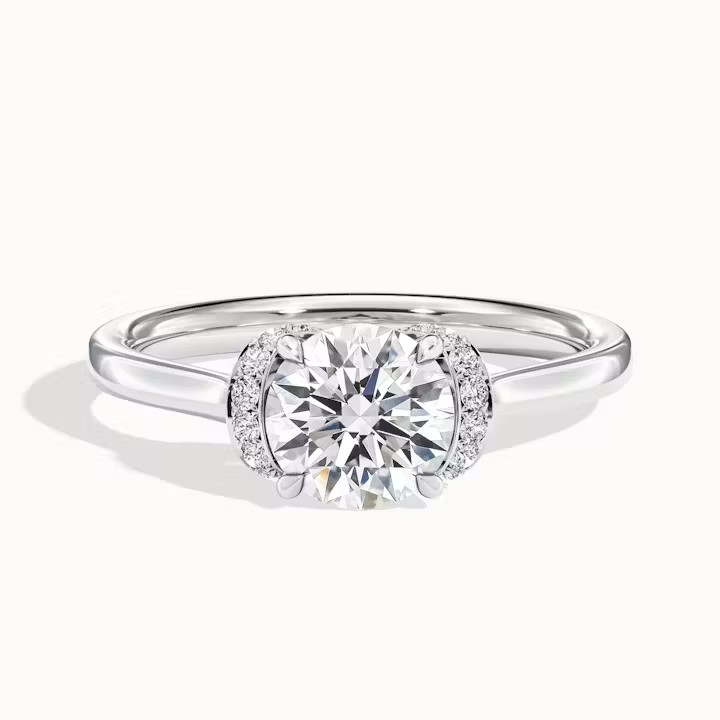
Beaumont
Pear Orban
Bespoke Radiant Cut
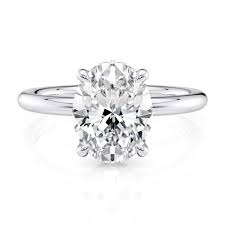
oval Bardot
ETHICAL ENGAGEMENT RING
Ensuring Ethical Sourcing in Every Stone
Explore the significance of ethical diamond sourcing through understanding the UN’s Kimberley Process, advancements in industry practices for tracing diamond origins, and the benefits of opting for lab-grown diamonds
What constitutes an ethical diamond?
In recent years, initiatives have begun to address the historical lack of regulation in the diamond mining industry. While diamond mining can contribute positively to local economies by fostering development, providing jobs, and supporting infrastructure and education, the unregulated control of these resources can lead to detrimental outcomes. Areas rich in natural resources, including diamonds and gemstones, often face challenges known as the “resource curse” or “paradox of plenty.”
When control of these resources falls into the wrong hands, conflicts may arise over ownership and control. Illegitimate groups or insurgencies may exploit diamond mines to fund violent conflicts, exacerbating instability rather than supporting community development. This dark reality, often overlooked until global initiatives took action in the 2000s, underscores the importance of ethical diamond sourcing.
Diamonds mined under these conditions, fueling conflict and violence, are termed “blood diamonds,” “conflict diamonds,” or “unethical diamonds.” According to the UN, blood diamonds originate from areas controlled by factions opposing legitimate governments, using profits to fund military actions contrary to international law and stability efforts.
Fortunately, global efforts are making strides in curtailing the trade of unethical diamonds. However, there remains much work to be done to ensure that diamond sourcing promotes ethical standards, supports local communities, and contributes positively to global stability and development.
How does the Kimberley Process ensure ethical diamond trade?
Introduced by the UN in 2003, the Kimberley Process was established to eradicate the trade of blood diamonds by implementing stringent controls over the production and trade of rough diamonds through an international certification scheme. This initiative mandates that participating countries, including major players like the UK, USA, Canada, India, UAE, and Australia, adhere to strict regulations to prevent the importation of unethical diamonds.
Currently, the Kimberley Process encompasses 81 participating countries and effectively prevents 99.8% of the global trade in conflict diamonds. This means that diamonds certified under the Kimberley Process, purchased in countries like the UK, are overwhelmingly likely to be conflict-free.While the Kimberley Process has significantly curtailed the trade in conflict diamonds, it is not without its challenges. Continued vigilance and strengthened commitments from the UN and other governing bodies are essential to completely eradicate unethical diamond trade worldwide. As ethical jewelers, , we are meticulous about our diamond sourcing practices. We refuse to purchase diamonds from unverified sources and maintain close relationships with reputable suppliers known for their ethical standards.
The Importance of the GIA Diamond Origin Report
The Gemological Institute of America (GIA), widely recognized as the foremost non-profit diamond grading organization globally, has recently introduced diamond origin reports as part of their expanded services. This advancement marks a significant step forward for the diamond industry, enhancing traceability and transparency in diamond sourcing practices. While not all GIA-certified diamonds currently offer this report, it is expected to become more prevalent in certified diamond markets.
To qualify for a GIA Diamond Origin Report, the rough diamond must undergo the GIA Rough Analysis Service before it is polished. This service requires the diamond to be accompanied by a Kimberley Process certificate, stating its country of origin, as well as an invoice from the mining company detailing the origin country. Strict protocols are in place to ensure the integrity of the process: the rough diamond is securely packaged and sealed with all necessary paperwork, and it can only be opened in the presence of a GIA representative to prevent contamination or mixing of stones from different sources.Once polished, the GIA utilizes sophisticated data matching techniques to verify the country of origin of the polished diamond against its rough state.
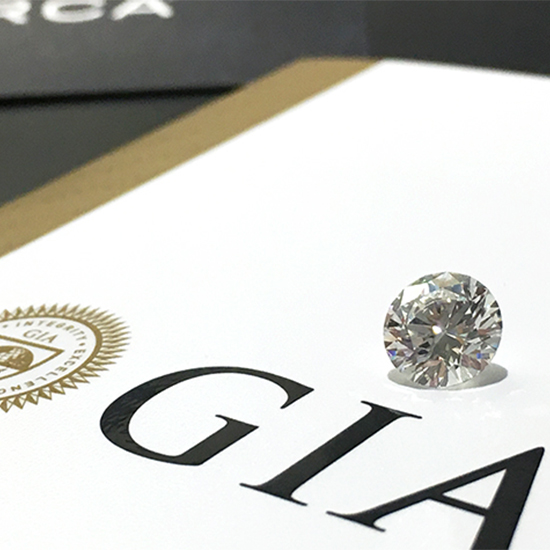
Facilitating a seamless connection between miners, manufacturers, wholesalers, and retailers, the Origin Report from the GIA guarantees expertly graded natural diamonds with scientifically confirmed countries of origin. This meticulous process not only ensures transparency and traceability but also enhances confidence in the ethical sourcing of diamonds throughout the supply chain.
The Rise of Ethical Lab Grown Diamonds
Choosing a lab-grown diamond for your engagement ring ensures a guaranteed ethical option. These diamonds are created in controlled laboratory environments that replicate the natural diamond formation process, which typically occurs deep within the Earth’s mantle over billions of years. Lab-grown diamonds are considered 100% real diamonds and are virtually identical to natural diamonds in every way. Many engagement ring buyers view lab-grown diamonds as a compelling choice, not only for their ethical advantages but also for their affordability, typically costing 60% to 80% less due to the efficiency of their production process.
An exciting development in the jewelry industry is the increasing use of solar energy to power the production of lab-grown diamonds, further enhancing their sustainability credentials.
While lab-grown diamonds offer clear ethical benefits, their growing popularity raises concerns about the potential impact on communities dependent on natural diamond mining. Reduced demand for natural diamonds could affect these communities’ livelihoods and local economies.
Exploring the pros and cons of purchasing a lab-grown diamond allows you to make an informed decision that aligns with your values and priorities. Whether you prioritize ethical considerations, sustainability, or budget-friendly options, understanding the nuances of lab-grown diamonds empowers you to choose an engagement ring that reflects your values.
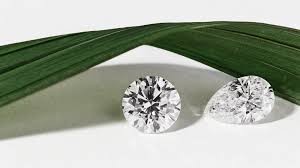
Lab-grown diamonds are indistinguishable from natural diamonds—even to experts—making them 100% authentic. Thanks to their efficient production methods, lab diamonds are available at a significantly lower cost compared to their natural counterparts.
ETHICAL ENGAGEMENT RINGS
Transparency in Sourcing: Ethical Diamonds and Metals
From our local, specialist, transparency in our supply chain is paramount. From our trusted local suppliers in Hatton Garden to the journey of mined diamonds, we prioritize ethical practices and traceability in sourcing the precious materials we work with.
Supporting Local Artisans
Choosing us as the location for our workshops and showrooms was a deliberate decision rooted in its prominence as the UK’s leading jewelry hub. Renowned globally, Hatton Garden boasts a concentration of the finest diamond and metal suppliers, goldsmiths, and jewelry experts. This strategic placement allows us to maintain a predominantly local supply chain, collaborating closely with trusted and transparent suppliers.
The diamonds we use primarily come from local Hatton Garden suppliers, known for their commitment to quality and ethical sourcing practices. We have cultivated strong relationships with these suppliers, ensuring we can offer our clients the best quality diamonds at competitive prices. Similarly, our reliable precious metal suppliers are also based in Hatton Garden, providing us with the materials needed to craft exceptional jewelry.
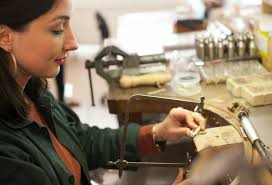
Queensmith boasts one of the largest in-house jewelry workshop spaces in London—a testament to our dedication to keeping production processes local. By managing production in-house, we not only control costs effectively but also uphold our high standards of craftsmanship. Our meticulous and talented goldsmiths play a pivotal role in delivering these standards, and when you visit our stores, you can witness them at work, bringing your jewelry to life. We prioritize fair compensation for our crafters and ensure transparency throughout our production process, from design to final creation.
In the creation of a Queensmith ring, the only step outsourced is casting, a process that demands advanced equipment and specialized skills. For this crucial task, we collaborate with a trusted, specialist team located nearby in Hatton Garden. This proximity allows us to maintain transparency and accountability, ensuring the highest quality standards in casting. This local collaboration underscores our commitment to efficiency, transparency, and reliability in crafting bespoke, high-quality jewelry.
Global Connections in Diamond Procurement: Ethical Sourcing Practices
While diamonds and precious metals are not naturally sourced in Hatton Garden, they originate from various natural deposits worldwide.Our diamonds come from diverse geographical locations such as Botswana, Namibia, Australia, South Africa, and other regions known for their diamond reserves. We do not directly procure diamonds from mines due to the multiple stages they must undergo before entering the market.Ethical diamonds are awarded Kimberley Process (KP) certificates when mined in conflict-free zones. This certification is crucial for diamonds entering participating countries and is essential for initiatives like the GIA’s Origin Report, a new service enhancing traceability in ethical diamonds.Rough diamonds proceed to auction and then to polishing centers, with 92% of diamonds cut and polished in hubs like Surat, India, Tel Aviv, Israel, and Antwerp, Belgium. Reputable polishers refuse diamonds lacking KP certificates, ensuring unethical stones are excluded from the supply chain.Following polishing, diamonds are prepared for sale by suppliers to jewelers. At Queensmith, we prioritize certified diamonds from reputable grading laboratories like GIA. Each GIA-certified diamond undergoes rigorous grading, including two rounds to ensure accuracy. GIA’s non-profit status ensures unbiased grading, avoiding potential over-valuation.Diamond suppliers technically own diamonds at the certification stage. We work closely with a select group of trusted suppliers, specifying requirements such as shape, carat size, and grade. Our gemologists assess each diamond before confirming our selection. We only collaborate with respected and transparent suppliers, avoiding uncertified or second-hand diamonds to guarantee traceability and quality assurance.
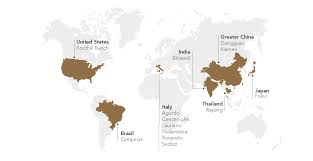
Map showing the top ethical diamond sources in the world.
Ethical Stand: Our Policy Against Russian Diamonds
In the past, Russia was often regarded as an ethical source of diamonds. However, following Russia’s invasion of Ukraine in early 2022, the jewelry industry has reassessed its stance on ethical diamond sourcing. In response to these developments, we made the decision in early March 2022 to impose a self-imposed ban on purchasing and selling any diamonds known to originate from Russia. This includes ceasing the sale and marketing of diamonds that are mined, distributed, and labeled by the Russian Federation-backed conglomerate Alrosa.
Alrosa, in which the Russian Federation holds a 33% ownership stake, operates diamond mines in Western Yakutia and Arkhangelsk. Given the circumstances, profits generated from the sale of rough diamonds mined by Alrosa could indirectly support Russia’s aggressive military actions in Ukraine. Therefore, diamonds sourced from Russia are now considered conflict diamonds, prompting to adopt a stringent policy of not engaging with any diamonds of Russian origin.
For further details, you can read complete statement on the immediate ban on Russian diamonds.
ETHICAL ENGAGEMENT RINGS
Ethical Sourcing Initiatives: Fair Trade and Recycled Metals
Explore the opportunity to craft your ring using Fair Trade metals, ensuring ethical origins and sustainable practices.we prioritize using metals that have been meticulously recycled and refined.
Embracing Fair Trade Metals in Your Ring
we offer the option to craft any ring using Fair Trade gold metal, cast by a trusted local company using gold sourced exclusively from certified Fair Trade mines. Unfortunately, for platinum and rose gold rings, certified Fair Trade options are not currently available. However, our clients can select from either Fair Trade yellow gold or white gold for their designs.
It’s important to note that opting for Fair Trade metal does not imply that non-Fair Trade metals are inherently unethical. Similar to choosing lab-grown diamonds for their ethical considerations, some clients prefer the assurance of knowing the origins of their metal have been certified as ethical. Mining, when conducted responsibly, can significantly contribute to local economies by providing jobs, infrastructure, education, and social development.
Fair Trade gold typically costs approximately 20% more than other metals due to the rigorous scrutiny and certification process that ensures its ethical origins.
Recycled Metals for Your Ring
The majority of our local metal suppliers specialize in reclaimed and recycled metals, ensuring that almost all of the rings we craft at Queensmith are made using recycled materials. These recycled metals undergo rigorous refinement processes by our trusted suppliers to achieve the highest purity levels, suitable for creating rings that endure for a lifetime and beyond.
Clients often inquire whether we can reuse the metal from heirloom and antique rings. Unfortunately, we cannot guarantee the purity of metal from vintage pieces, which can pose challenges during crafting and lead to issues such as breakage and weakness after production. While we can typically reset existing diamonds and gemstones, the metal itself must meet stringent purity standards for durability and longevity.To ensure the highest quality, our recycled metals are sourced from experts who have refined their processes over years of experience.
OUR COMMITMENT
Our Guarantee to You
We are dedicated to ensuring you have all you need to shop confidently and with peace of mind every step of the way with us.
Sustainable Sourcing
Created in USA
Verified Diamond
Permanent Assurance
Free Delivery Service
Free Resizing for Life
Extended Return Period
Aftercare Included
Introducing Our Jewellery Consultant
Allow our team of expert gemmologists, goldsmiths, and designers to lead you through the journey of crafting a truly personalized piece of jewelry. With their knowledge and dedication, they’ll ensure your vision is brought to life with precision and care.
Need help choosing the perfect ring?
Get in touch with our experts - we’re on hand to help.
- + 91 12345 67890
- Live Chat
- Visit our showroom
- Send us an email
- Book Appointment
- Help & FAQs
ShimmerShack
You can easily edit this paragraph to talk about your brand as well as your products to your potential customers.
Reach Us
- Lorem ipsum dolor sit amet, consectetur adipiscing elit. Quisque.
- Phone: +91 1234567890
- test@gmail.com